How to Build a Connected Hotel
Hotel teams are working harder than ever. They are managing volatile demand, rising guest expectations, labor pressure, owner scrutiny, and increasingly complex technology stacks. Yet for many hotels, the real challenge is not the amount of effort going into the operation. It is the number of gaps between the systems, teams, and decisions that shape performance.
Forecasting may sit in one system. Labor planning may sit in another. Guest operations may run through a different workflow. Asset and maintenance data may live somewhere else entirely.
Each tool may solve a specific problem. But when those tools do not connect, leaders still have to stitch the business together manually.
That is where a connected hotel model begins.
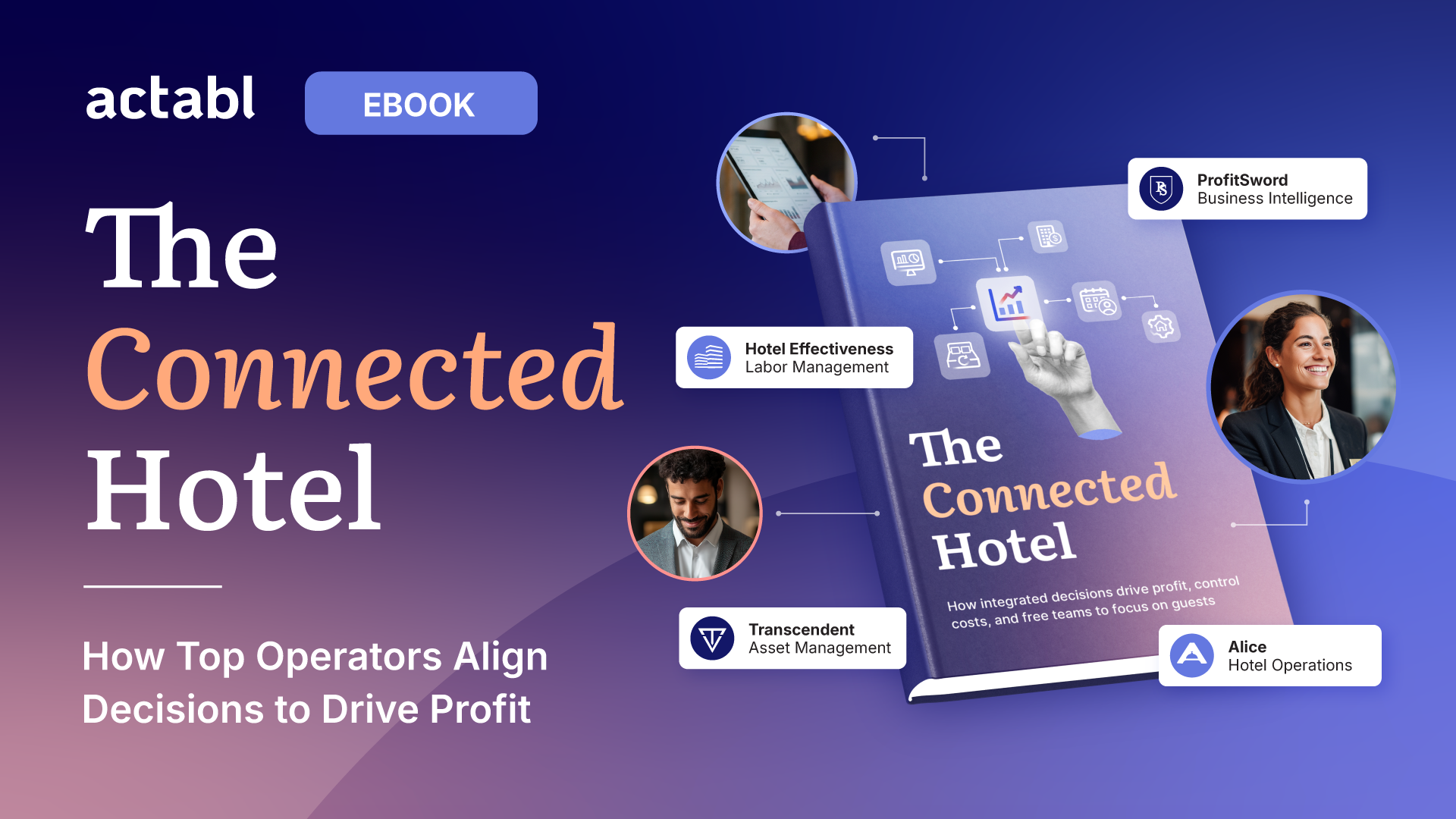
- Download The Connected Hotel eBook to explore the full framework for connecting planning, labor, operations, and asset management into one operating system for hotel performance.
Start With the Real Problem: Fragmentation
Most hotels already have technology in place. They have reporting platforms, scheduling tools, operational systems, and maintenance software. The issue is not whether these systems exist. The issue is whether they work together. When they do not, small gaps become daily friction.
- Forecast changes do not always inform staffing
- Labor decisions may not reflect real-time demand
- Guest requests may move through one workflow while engineering teams manage priorities in another
- Asset decisions may lack the operational context needed to guide investment
The result is delay. Teams spend more time validating reports, chasing updates, and explaining variances than acting on what is happening now.
As Andrew Arthurs, President and Chief Operating Officer at Actabl, explains, hotels need “a central source of truth” to gain visibility into their numbers and make better decisions. Without that trusted view, performance management becomes slower, less consistent, and harder to scale.
Build Shared Visibility Across the Portfolio
The next step is to create shared visibility to help teams move from hindsight to action:
- Forecasts inform labor
- Labor informs operations
- Operations reveal asset needs
- Asset performance supports capital planning
- Performance data then resets the plan
David Nelson, Technical Customer Service Manager at Actabl, describes the goal as “consistent data across not just the site but the whole portfolio.” That consistency gives above-property leaders a clearer view of standards, workflows, and performance, while still giving properties room to adjust where local conditions require it.
Align the Four Pillars of Performance
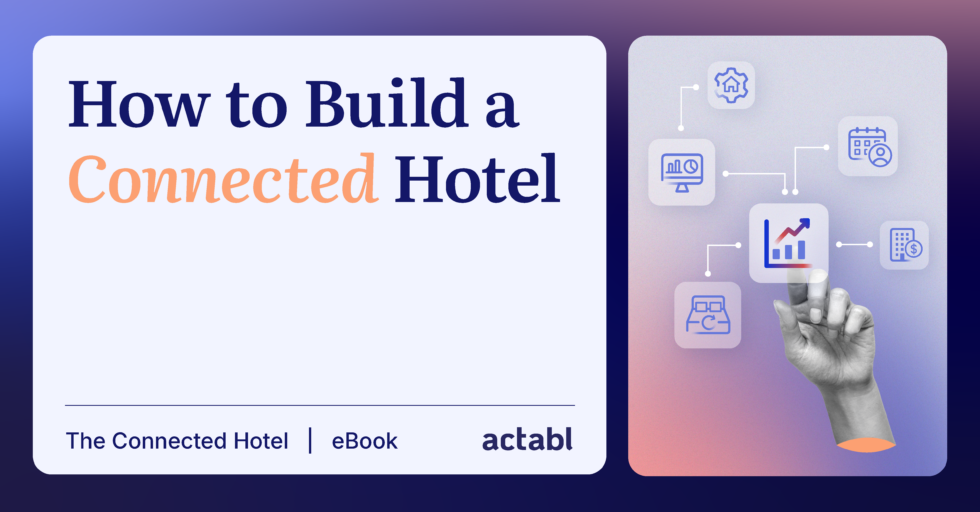
A connected hotel operates across four core pillars: planning and forecasting, labor optimization, operations execution, and asset and CapEx planning.
Planning and forecasting set direction. When forecasts update with real-time business conditions, they become more than reports. They become tools that guide decisions across the hotel.
Labor optimization connects staffing to demand. Rather than building schedules from habit or last year’s patterns, managers can align teams to occupancy, arrivals, stayovers, outlet activity, and known events.
Operations execution turns strategy into the guest experience. A strong forecast and labor plan mean little if teams cannot assign work, communicate status, and resolve issues quickly.
Asset and CapEx planning protects long-term value. Maintenance data, asset history, and operational signals help teams move from reactive repairs to more structured planning.
Each pillar can improve performance on its own. The real value comes when they work together.
Make the Work Flow
The connected hotel runs on a simple cycle: plan, staff, operate, invest, measure, and adjust. Each stage should inform the next.
Jerimi Ford, Chief Innovation Officer at Actabl, describes the need clearly: “The operations team needs to know what, why, when, how, and who.”
That clarity matters because hotel teams don’t need more noise. They need direction. In a busy operation, managers may have 50 things they could act on. A connected model helps them identify the few actions that matter most today.
- Download the Connected Hotel Self-Assessment to evaluate where your operation is connected, where it is partially connected, and where hidden friction may still be slowing decisions across planning, labor, operations, asset management, and system connectivity.
Connect Workflows, Not Just Data
Data integration matters, but it’s not enough. A connected hotel must also connect workflows. A forecast should not just appear in a report. It should inform staffing. A guest request should not just create a note. It should route to the right department. A maintenance task should not just close in one system. It should update the teams that need to know the issue has been resolved.
Jerimi captures this operational need well: “Once someone submits something, I don’t want to go look for it. I just want it to happen and be done.”
This is where connection changes the guest experience. If a guest reports an AC issue, the request should move quickly to the right person. The front desk should know the status. Engineering should have the information needed to act. The guest should receive timely follow-up.
The guest does not care which system owns the task. The guest cares whether the hotel sees the issue, fixes it, and follows through.
Turn Standards Into Scalable Practice
For hotel groups, connection also supports scale. One great GM, one experienced engineer, or one strong executive housekeeper can drive excellence at a single property. But portfolio performance depends on making that knowledge repeatable. That means setting clear standards, training teams, and creating a structure for adoption.
Sean Finley, Senior Director of Enterprise Sales at Actabl, says that if there is no way for “tribal knowledge to transcend from your best-in-class all the way to your bench,” portfolio-level success becomes difficult.
The connected hotel turns individual excellence into shared practice. It helps teams define what good looks like, measure whether it is happening, and coach properties that need support.
When hotels connect systems and workflows, the impact shows up in practical ways. Teams make faster decisions because they spend less time reconciling data. Labor aligns more closely with demand. Managers gain clearer visibility into daily work. Maintenance teams can reduce avoidable disruption through stronger preventive planning. Leaders can compare performance with greater confidence.
Once teams trust the information, they can spend more time acting on it. This is not only a financial benefit. It’s also a guest benefit. When managers spend less time chasing reports and updates, they have more time to coach teams, solve problems, and focus on service.
Move From Disconnected to Connected
A connected hotel is not built by adding more tools. It is built by aligning the systems, workflows, standards, and teams that already shape performance.
Start by mapping where decisions break down. Define the source of truth. Standardize the baseline. Protect smart property-level variation. Connect workflows. Train teams. Review what is working, and adjust.
The goal is not perfection. The goal is a faster, clearer, more consistent way to run the business.
Disconnected systems create hidden cost. Connected systems create control. That control shows up in better labor decisions, faster service recovery, stronger asset planning, clearer accountability, and more time focused on guests.
Download The Connected Hotel eBook to explore the full connected hotel framework and see how Actabl helps hotel teams connect planning, labor, operations, and asset management into one operating system for performance.