Hotel Budget Season: How to Prepare for 2027
Hotel budget season is more than an annual finance exercise. Done well, it gives hotel leaders a clear plan for growth, cost control, and profitability.
For 2027, that plan needs to rest on better data. Demand patterns continue to shift, labor costs remain under pressure, and operators face rising expectations from owners, guests, and teams. A budget built from last year’s numbers, broad assumptions, and disconnected spreadsheets may not give leaders the visibility they need.
The strongest hotel budgets combine internal performance data, external benchmarks, operational insight, and a clear view of where technology can improve efficiency.
Actabl’s 2026 Budget Checklist gives hotel teams a practical starting point. HotelData reports add the market and operating benchmarks needed to pressure-test assumptions. Together, they can help leaders move from budget season stress to a more disciplined planning process.
Start Budget Season With Better Benchmarks
Before setting 2027 targets, hotel leaders should first review what happened this year. That means looking beyond revenue and asking sharper questions:
- Did actual performance match the budget?
- Did forecasts improve as the year progressed?
- Did ADR growth flow through to profitability?
- Did labor costs rise faster than expected?
- Did staffing levels align with demand?
- Did CapEx decisions support guest experience, or defer costs into the future?
These questions help teams understand where the plan worked, where it missed, and where leaders need more control.
HotelData reports can support this review by giving teams a broader view of hotel performance trends. Profitability reports help leaders assess metrics such as ADR, RevPAR, TRevPAR, GOP%, GOPPAR, budget accuracy, and forecast accuracy. Labor reports help teams evaluate wage growth, CPOR, HPOR, overtime, staffing levels, and productivity.
This matters because hotel teams should not build budgets in isolation. Internal results show what happened inside the business. External benchmarks help leaders understand whether those results reflect property-level issues, portfolio trends, or wider market pressure.
Include the Right Data in Your 2027 Hotel Budget
A strong hotel budget should connect commercial goals with operational reality. Start with revenue assumptions. Review occupancy, ADR, RevPAR, TRevPAR, booking pace, group demand, transient demand, and market mix. A 2027 budget should show how the hotel expects to drive revenue, not just how much revenue it hopes to achieve.
Next, review labor costs. Labor remains one of the most important cost categories for hotels, so leaders need to budget carefully. Include wage trends, scheduled hours, overtime, productivity, staffing models, and department-level labor assumptions. A labor budget that does not account for actual operating patterns can leave managers with targets they cannot meet.
Operating expenses also need detailed review. Utilities, insurance, maintenance, supplies, vendor contracts, and departmental costs can all affect margin. Budget season gives teams the chance to identify where costs have shifted, where contracts need review, and where small increases could add up to greater pressure.
CapEx planning should be part of the same conversation. Asset condition, replacement cycles, preventive maintenance, and capital timing can shape profitability and guest satisfaction. Delaying investment may protect a short-term budget line, but it can lead to higher costs if equipment fails, rooms go out of service, or the guest experience suffers.
Finally, a good budget should ask how well the organization predicted performance during the prior year. Forecast accuracy can indicate whether teams had the right data, cadence, and level of alignment between finance and operations.
Align Finance, Operations, and Ownership Early
Hotel budget season works best when finance and operations build the plan together:
- Finance leaders bring structure, ownership expectations, and a clear view of profitability.
- Operators bring practical knowledge of staffing, service delivery, guest needs, maintenance demands, and day-to-day cost control. Both perspectives matter.
When department leaders understand the reasoning behind their targets, they can make better decisions during the year. A housekeeping leader can connect productivity to labor cost per occupied room. An engineering leader can connect preventive maintenance to capital planning. A general manager can see how revenue, labor, guest experience, and asset performance work together.
This kind of alignment also improves accountability. Teams are more likely to own a budget when they help shape it.
The 2026 Budget Checklist can help hotel leaders structure these conversations. It gives teams a practical way to review performance, assess assumptions, and prepare for the next planning cycle with more clarity.
Move From Annual Budgets to Rolling Forecasts
The annual budget still matters, but hotel leaders should not treat it as a fixed document.
Market conditions can change quickly. Demand can shift. Wage pressure can increase. Group business can move. Expenses can rise. A budget created months before the year begins needs regular review to stay useful.
Rolling forecasts help teams compare actual performance against budget, update expectations, and act earlier. They give leaders a clearer view of whether the hotel is on track, where risks are emerging, and which actions may protect profitability.
For many hotel teams, the barrier is not intent. It is process. If teams rely on manual spreadsheets, delayed reporting, and disconnected systems, they may not see problems until the opportunity to respond has passed. Budget season should therefore include a review of how quickly leaders can access accurate data.
Ask whether your current systems help teams answer key questions fast. Are managers working from the same numbers? Can leaders see labor risk before costs rise? Can finance compare budget, forecast, and actuals without manual consolidation? Can ownership see portfolio performance with confidence? If not, the budget process may need better technology support.
Why Tech Investment Belongs on the 2027 Spend List
Technology should be part of the 2027 budget conversation, not an afterthought.
Hotel leaders often scrutinize technology spending because it appears as a cost line item. But the better question is what disconnected systems, manual reporting, and limited visibility already cost the business.
When hotel teams spend hours reconciling spreadsheets, chasing updates, or waiting for reports, they lose time they could use to manage performance. When labor planning doesn’t align with demand, overtime and scheduling pressure can increase. When maintenance and CapEx planning lack visibility, assets can fail at the wrong time. When financial and operational data sit in separate systems, leaders struggle to act with confidence.
Connected technology can help solve these problems.
Business intelligence tools can bring financial and operational data into one clearer view. Labor management systems can help teams schedule around demand, track productivity, and control overtime. Operations platforms can help hotels manage service delivery, housekeeping, and maintenance with more consistency. Asset and CapEx tools can help leaders plan repairs, replacements, and capital spend with better insight.
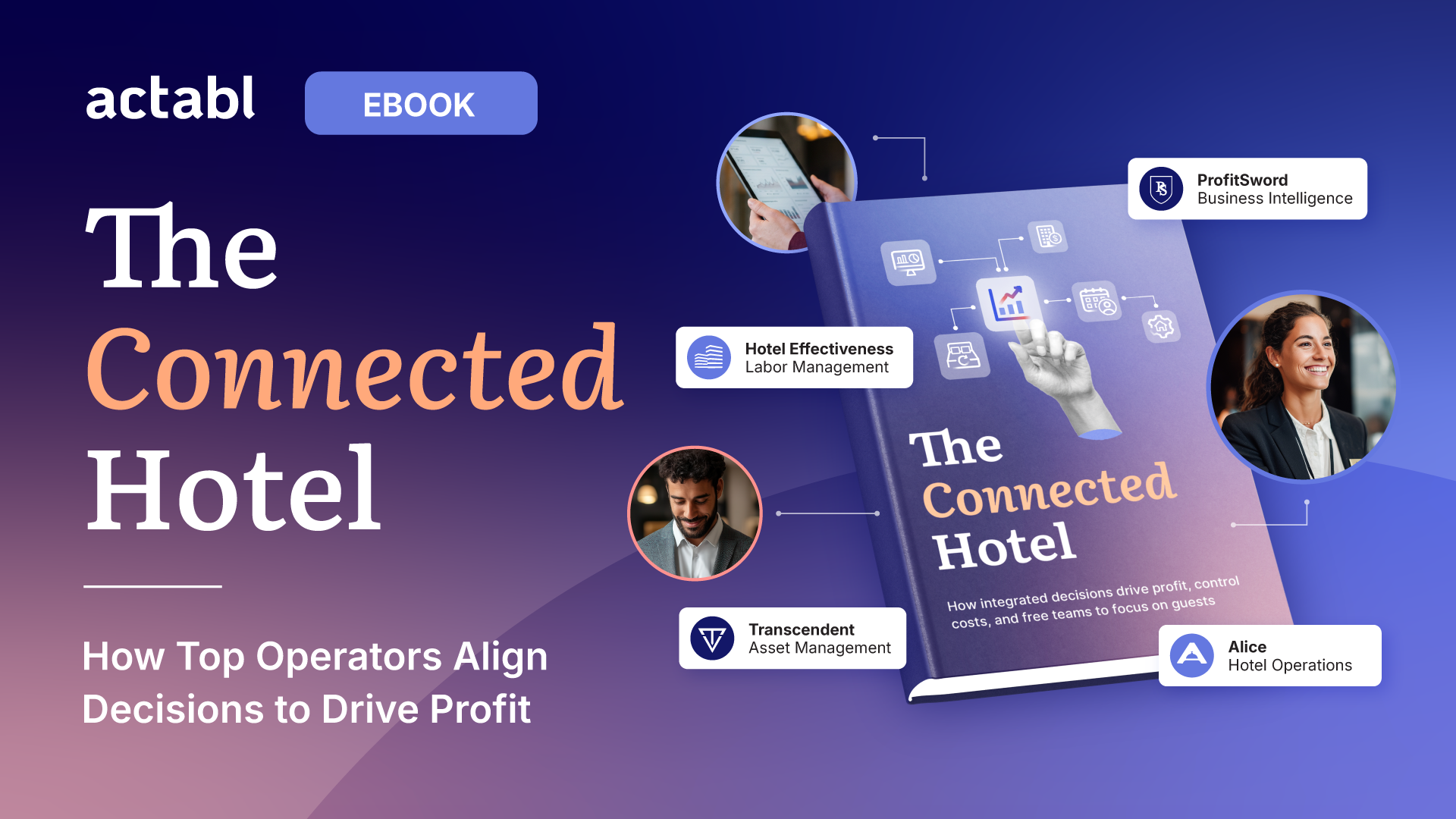
Our The Connected Hotel eBook shows how leading operators connect forecasting, labor, operations, and asset planning,
These investments can support better budgets by improving the quality, speed, and usefulness of the data behind the plan.
For 2027, hotel leaders should evaluate technology through a performance lens:
- Will it reduce manual work?
- Will it improve forecast accuracy?
- Will it help managers make faster decisions?
- Will it support labor efficiency?
- Will it protect assets?
- Will it help leaders understand performance across the property or portfolio?
If the answer is yes, technology deserves a place in the budget.
Prepare for Budget Season With Actabl and HotelData
Hotel budget season gives leaders a chance to turn recent performance into a stronger plan for the year ahead.
For 2027, that means starting with accurate benchmarks, reviewing labor and profitability trends, aligning finance and operations, planning for CapEx needs, and evaluating where technology can improve efficiency.
Actabl helps hotel teams bring business intelligence, labor management, operations, and asset data into sharper focus. HotelData adds timely benchmarks and performance reports that help leaders understand the trends shaping the market.
Together, they help hotel teams build smarter budgets, strengthen forecasts, and make better decisions throughout the year.
Download Actabl’s 2026 Budget Checklist to start preparing for budget season. Use the latest HotelData profitability and labor reports to benchmark your assumptions before building your 2027 plan. And get in touch with Actabl to discover how our solutions can turn your operational intelligence into profitability in 2027.