
H1 Hotel Labor Data Shows Why Scheduling Must Follow Demand
Hotel labor productivity improved during the first half of 2026, but the bigger lesson for operators is not simply that hours declined. It is why those hours matter.
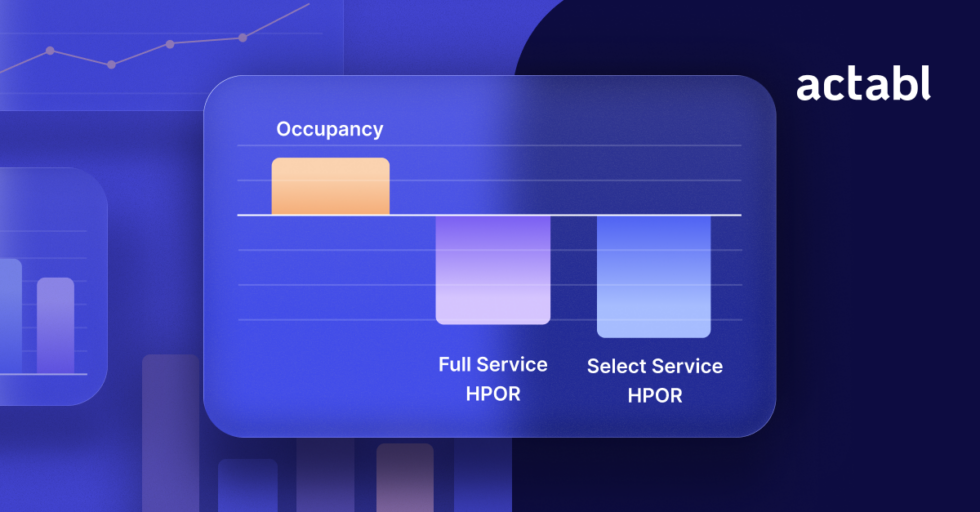
The latest HotelData H1 Labor Costs Report found that Full Service hotels reduced Hours per Occupied Room (HPOR) by 3.1% compared with H1 2025. Select Service hotels reduced HPOR by 3.5%.
HPOR was lower year over year in every month from January through June across both hotel types. At the same time, demand strengthened.
The H1 2026 Hotel Profitability Report showed occupancy rising from 66.8% to 67.9%, RevPAR increasing 8.9%, and TRevPAR increasing 9.2%.
The operating opportunity is clear: when demand grows faster than the labor required to service it, hotels create leverage.
H1 shows what better alignment can look like
The productivity improvement extended beyond hotel-level HPOR. Every hourly housekeeping position analyzed in the report used fewer Minutes Per Occupied Room (MPOR) than in H1 2025.
- Full Service hotels: Room Attendant MPOR fell 2.7%, while Houseperson and Laundry Attendant MPOR declined 2.7% and 2.2%, respectively.
- Select Service hotels: Room Attendant MPOR declined 5.0%. Laundry Attendants improved 3.1%, and Housepersons improved 2.3%.
The Select Service Room Attendant result translates to approximately 1.2 fewer labor minutes per occupied room.
Across one room, the difference is small. Across a hotel servicing thousands of occupied room nights, it becomes significant.
The value comes from repeating that precision without reducing service standards or creating unsustainable workloads.
Higher wages make forecasting more important, not less
The H1 productivity gains did not come because hotel labor became cheaper. Annual wage growth across the hourly housekeeping positions analyzed ranged from 2.9% to 3.3%.
Hotels cannot control the prevailing market wage. They can control how many hours they schedule against the business they expect. That changes how leaders should think about labor cost. The goal should not be to minimize the schedule. It should be to make the schedule as accurate as possible.
Overstaff a low-demand shift, and every excess hour carries a higher wage rate than it did a year ago. Understaff a high-demand shift, and the property risks overtime, employee fatigue, delayed rooms, service issues, or managers stepping into hourly work. Better forecasting helps reduce both problems.
Lower HPOR should not become a race to the bottom
There is also an important caution in the H1 data. Productivity remained better than 2025 during Q2, but the pace of improvement moderated.
Full Service HPOR improved 3.7% year over year in Q1 and 2.5% in Q2. Select Service slowed from a 5.1% improvement to 1.8%.
That does not mean hotels lost control of labor. It may mean they are approaching a more sustainable productivity baseline as demand rises.
Operators should resist turning every efficiency gain into a permanent labor cut. The objective is not the fewest possible hours. It is the right hours for the demand that actually arrives.
Demand growth creates opportunity. Scheduling determines the leverage.
The H1 Profitability Report showed stronger occupancy, RevPAR, TRevPAR, and profit margins during the first half. The labor data adds an operational layer to that story.
Full Service and Select Service hotels required fewer labor hours per occupied room even as demand strengthened. That is where better forecasting can make the difference.
Hotels that want to protect the HPOR gains seen in H1 need schedules that respond to the work underneath the occupancy number. That means connecting labor planning directly to occupancy forecasts, arrivals, departures, stayovers, groups, events, and other property-specific workload drivers.
The closer those signals sit to scheduling decisions the less likely hotels are to pay for labor before it is needed or find themselves short when demand materializes.
When labor grows more slowly than demand without sacrificing service, stronger revenue has a greater opportunity to become stronger margin.
Download the full H1 Labor Costs Report here.