
The Measurable Impact of Connected Hotel Operations
Hotels don't connect their systems just to simplify their technology stack. The investment has to improve performance.
When forecasting, labor, operations, and asset management work together, the benefits begin to show up in the daily decisions that shape profitability. Teams spend less time validating information. Managers respond to changing demand sooner. Labor aligns more closely with operational needs. Maintenance becomes more proactive. Leaders gain clearer accountability.
The measurable impact is not one headline number. It is a series of improvements across the operation.
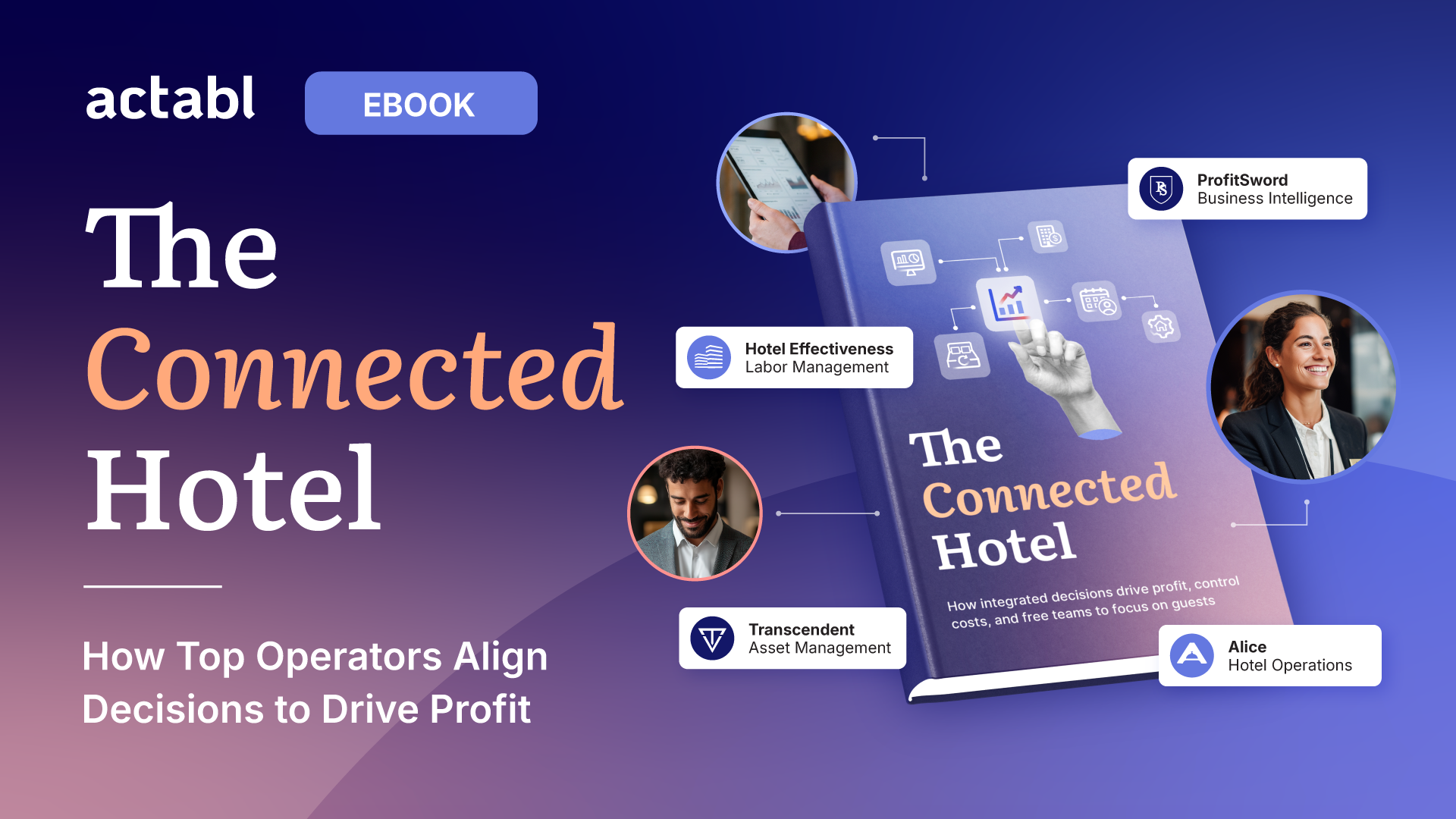
- This blog is adapted from our latest free download: The Connected Hotel eBook. Download today to explore the full framework for connecting planning, labor, operations, and asset management into one operating system for hotel performance.
Faster decisions
One of the clearest benefits of connected operations is speed.
In a fragmented environment, teams can spend valuable time gathering, checking, and reconciling information before deciding. Reports explain what happened, but they may arrive after the hotel has lost the opportunity to influence the result. Connected systems shorten that gap.
Andrew Arthurs, President and Chief Operating Officer at Actabl, explains that hotel demand changes daily. Real-time information gives operators the ability to make decisions that can still affect performance in the same month, week, or day.
Sean Finley, Head of New Business at Actabl, puts it another way: “You can really start to actually execute against that versus spending your time sifting through it.”
Once teams trust the data, they can spend more time planning what to do next rather than explaining what already happened.
Better labor control
Labor is one of the clearest areas where connection can improve control. The goal is not simply to reduce hours. It is to match the right people to the right work at the right time.
Demand can change quickly. Weather, events, group movement, callouts, and short booking windows can all alter staffing requirements. A schedule based on yesterday’s assumptions may already be outdated. Connected labor planning gives managers a clearer view of forecast demand, schedules, and actual performance.
Shanell Marunuzzi, Account Manager at Actabl and a former hotel GM, describes the alternative: “It’s really making sure that you have used tools to analyze the data, bring in that forecast schedule, and then tell you how to operate with the means to do so. Otherwise, you’re guessing, and it doesn’t work.”
That visibility helps managers make informed adjustments instead of relying on instinct alone. The measurable gain is better alignment between staffing and demand, while still protecting both guest service and the associate experience.
More consistent execution
Connected operations also reduce the gaps between departments. Hotels depend on hundreds of handoffs every day. A housekeeper reports a maintenance issue. Engineering receives it. The front desk needs to know when it is resolved. Someone may then need to follow up with the guest. When each department works through different channels, those handoffs create risk.
Jerimi Ford, Chief Innovation Officer at Actabl, identifies communication as one of the most common points of failure. His goal for connected workflows is simple: “Once someone submits something, I don’t want to go look for it, I just want it to happen.”
The workflow should carry information forward without employees having to chase it manually.
David Nelson, Technical Customer Service Manager for Transcendent, describes how connected systems can route requests directly to engineering, alert the appropriate team member, and update other departments once the issue is resolved. The impact is fewer missed handoffs, clearer ownership, and faster execution.
Stronger asset value
Connected operations can also improve how hotels manage physical assets.
Reactive maintenance costs more than the repair itself. Equipment failures can disrupt rooms, affect guest satisfaction, increase labor demands, and accelerate capital spending. Preventive maintenance helps reduce that risk.
Jerimi points to the financial benefit of extending the useful life of major equipment. If a hotel can delay a significant replacement through better maintenance, it preserves capital and reduces the likelihood of a guest-facing failure.
Daily walkthroughs, planned maintenance, and structured checklists cannot eliminate reactive maintenance, but they can reduce it. Better asset data also gives leaders stronger evidence for CapEx planning and prioritization.
Clearer accountability
When finance, operations, labor, and leadership work from different reports, performance discussions can start with a debate over the numbers. When teams share the same data, they can move more quickly to action. But visibility alone is not enough.
Sean makes the adoption point clearly: “Whether you have a Toyota or a Ferrari, you have to know how to drive. You have to use it.”
Technology creates value only when teams use it consistently. That requires training, operating discipline, and clear expectations.
Jerimi makes a similar point: adoption is strongest when technology becomes part of the culture rather than another system employees are told to use.
Measure the operating change
Hotels assessing connected operations should look beyond implementation milestones and system logins.
The better questions are operational:
- How quickly can teams respond to a performance variance?
- How closely does staffing follow demand?
- How much time is spent reconciling reports?
- How many operational handoffs still require manual follow-up?
- Is preventive maintenance reducing avoidable disruption?
- Can leaders see who owns the next action?
These measures show whether technology is changing how the hotel operates.
The measurable impact of connection comes down to five areas: speed, labor control, operational consistency, asset value, and accountability. Together, they create a hotel that can respond faster, control costs more precisely, and give teams more time to focus on guests. That is the real value of connection. Not more data. More control over what happens next.
Download The Connected Hotel eBook to explore how planning, labor, operations, and asset management can work as one connected system.