
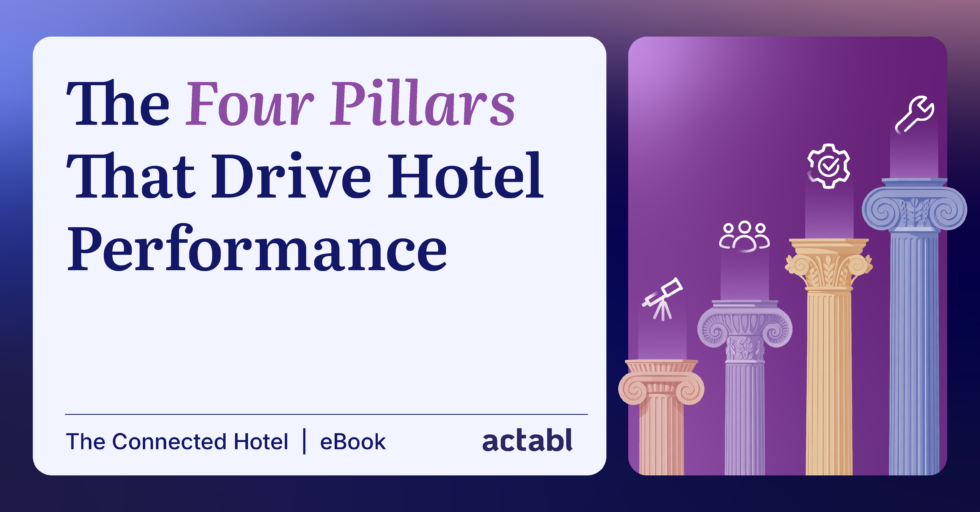
The Four Pillars That Drive Hotel Performance
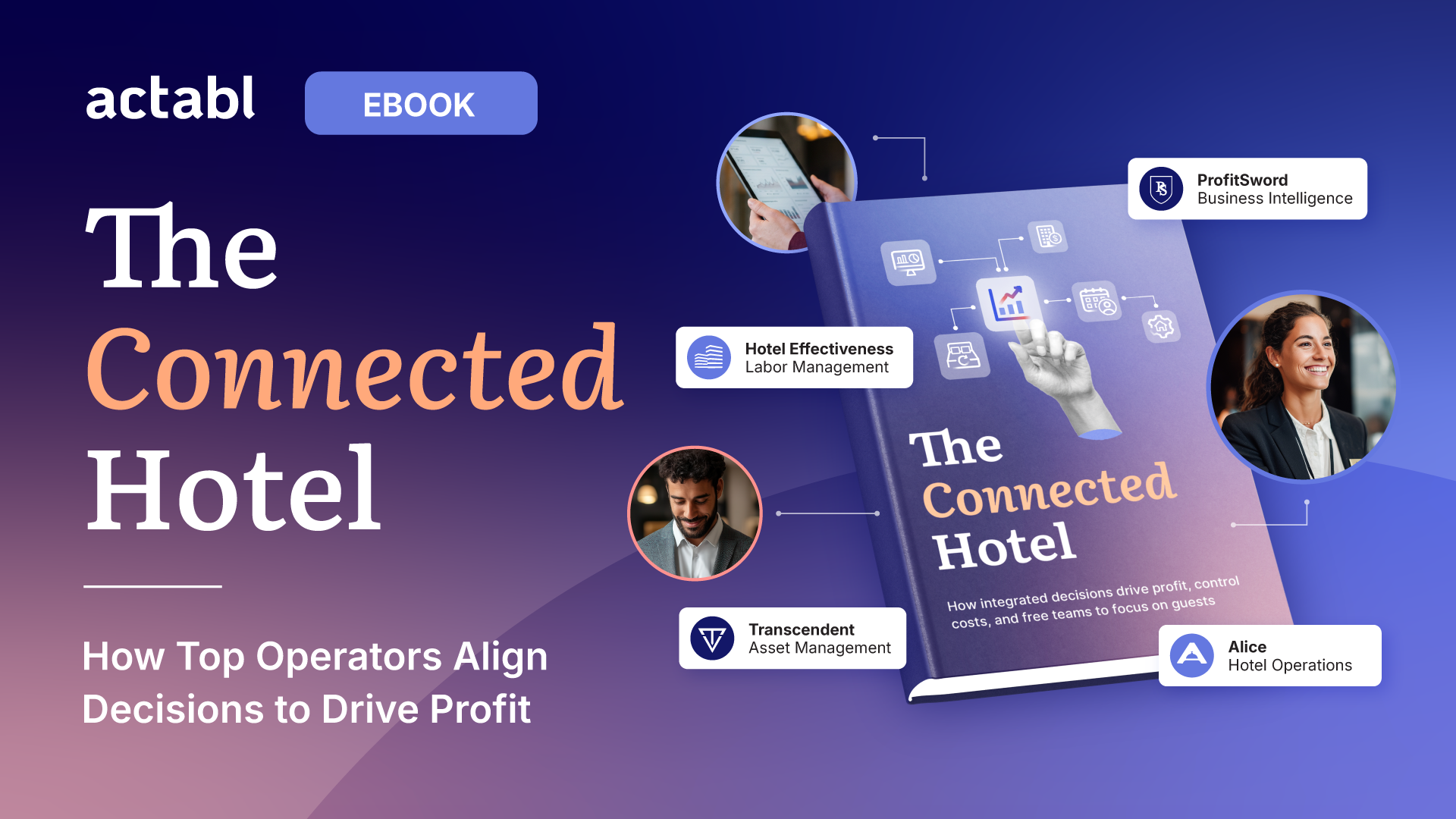
Every hotel operates across four critical areas: planning and forecasting, labor optimization, operations execution, and asset and CapEx planning. The difference between fragmented and connected performance is whether these areas inform one another. Individually, each improves performance. Together, they create control.
Together, the four pillars create the operating system of the connected hotel. Planning sets direction. Labor aligns resources. Operations execute. Assets support the experience. Performance data closes the loop. In an industry where guest expectations are high and margins are tight, unifying these elements is no longer optional; it’s the baseline for modern success.
- This blog is adapted from our latest FREE download: The Connected Hotel eBook. Download today to explore the full framework for connecting planning, labor, operations, and asset management into one operating system for hotel performance.
Pillar 1: Planning and Forecasting
Forecasting is where many decisions begin. It sets expectations for demand, revenue, costs, and profitability. Yet in many hotels, forecasting still functions as a periodic exercise. Budgets are built annually. Forecasts update on a set cadence. Teams review results after the fact. That cadence cannot always keep pace with hotel reality.
Hotel demand changes daily. The ability to act in the same month, week, or day depends on having real-time information at the fingertips of the people making decisions. Hotels should retire the habit of asking only why they missed. With better indicators, leaders can ask better questions: What did we see? How did we react? What could we have done in the moment?
Connected forecasting changes the question from what happened to what is changing now. When teams see booking pace, business mix, labor needs, and financial impact together, planning becomes a living process. That matters most when demand moves fast. A 48-hour change in occupancy, group pick-up, weather, or flight disruption can affect front desk coverage, housekeeping assignments, F&B staffing, and engineering priorities. A forecast disconnected from operations is a report. A forecast connected to workflows becomes a management tool.
Pillar 2: Labor Optimization
Labor remains one of the most difficult costs to control because it is both financial and human. It affects margins, guest service, associate satisfaction, and retention. The challenge is not simply scheduling fewer hours. The challenge is matching the right people to the right work at the right time. Labor demand can change by the hour. Events, weather, occupancy shifts, and outlet demand can all change how many people a hotel needs for a specific breakfast, arrival window, or banquet.
Shanell Marunuzzi, Account Manager at Actabl and a former hotel GM, describes the day-to-day reality as the unknown. Weather changes. Flights cancel. Callouts happen. PTO, sick time, and last-minute demand all disrupt the schedule.
“It’s really making sure that you have used tools to analyze the data, bring in that forecast schedule, and then tell you how to operate with the means to do so. Otherwise, you’re guessing, and it doesn’t work,” says Shanell.
Short booking windows are another source of operating pressure. Demand can change dramatically over 48 hours. That leaves leaders little time to change staffing models, bring in additional teams, or adjust service coverage. One answer is better data. Another is more flexible talent. Operators can identify associates who can work across roles. Cross-training creates resilience. It allows a hotel to adjust to changes in demand without treating every position as fixed and isolated.
Sean Finley, Senior Director of Enterprise Sales at Actabl, adds that labor management must be explained through the lens of both culture and cost. Managers and associates need to understand what’s in it for them. Labor planning should not sound like a cost-control mandate imposed from above. It should help teams serve guests, protect schedules, and create a healthier operating model.
Sean says: “Guest first, team second, profitability third; it all will come together.”
- Download the Connected Hotel Self-Assessment to evaluate where your operation is connected, where it is partially connected, and where hidden friction may still be slowing decisions across planning, labor, operations, asset management, and system connectivity.
Pillar 3: Operations Execution
Operations are where strategy becomes the guest experience. A forecast can be right. A labor plan can be sound. But if teams cannot communicate, assign work, complete tasks, and view status in real time, performance still breaks down.
Jerimi Ford, Chief Innovation Officer at Actabl, sees communication as one of the most common failure points. Technology has multiplied the number of places where communication can happen: Teams, Slack, Google, email, text, radio, calls, and in-person handoffs. More channels can mean more ways for information to break or get siloed. The solution is not more noise. It is clear process and connected workflow.
Jerimi describes how a housekeeper should be able to report an issue, check whether it has already been reported, and be confident that the work will be routed to the right team. The person reporting should not have to chase the request. The communication should persist.
The operational impact when systems connect is significant. A request from the kitchen, front desk, valet, or a guest can be routed to engineering. If staffing is low, the system can alert the on-duty engineer. When the engineer completes the work, the update flows back without another radio call.
This is what connection looks like at the property level. Not a dashboard that someone must interpret later. A workflow that moves the right work to the right person, then updates the right teams when it is complete. That matters because guest expectations do not wait for departments to coordinate. If the room has no hot water, the guest does not care which system owns the request. The guest cares whether the hotel sees it, acts on it, and follows up.
Pillar 4: Asset and CapEx Planning
Asset performance often sits outside the daily conversation about profitability. But it should not. Maintenance decisions affect guest experience, operating costs, capital planning, and owner value. A hotel that runs on reactive maintenance pays twice: once in repair costs and again in service disruption.
David Nelson, Technical Customer Service Manager for Transcendent, Actabl’s asset management software, is practical about the balance. No hotel can eliminate reactive maintenance. Equipment breaks. Guest issues happen. But structured daily walkthroughs, planned maintenance, and consistent checklists can reduce the volume and severity of reactive work, he says.
Jerimi explains the owner value more directly. Preventive maintenance can extend the useful life of major equipment. If a hotel can push a $30,000 hot water replacement several years down the road by maintaining the asset correctly, that preserves capital and reduces the risk of guest disruption.
“No hot water in a hotel would be a terrible thing for many guests. That is the reason why we do preventative maintenance; to make sure that we don’t have unexpected breaks to fix. It’s just imperative and, as the old saying goes, ‘Failing to plan is planning to fail’,” says Jerimi.
That is the reality of maintenance. Hotels either plan the work or pay for it later under worse conditions. Connected asset planning gives leaders better information. It shows what exists, where it is, how it performs, when it needs attention, and how it connects to guest and financial outcomes. That information improves preventive maintenance, capital planning, and portfolio-wide investment decisions, unifying the complete hotel ecosystem.
Download The Connected Hotel eBook to explore the full connected hotel framework and see how Actabl helps hotel teams integrate planning, labor, operations, and asset management into a single operating system for performance.