Case Study
How StepStone Hospitality Utilizes Data to Manage Labor
33%
decrease in overtime at some properties
2+ hours
saved every Monday on manual catch-up
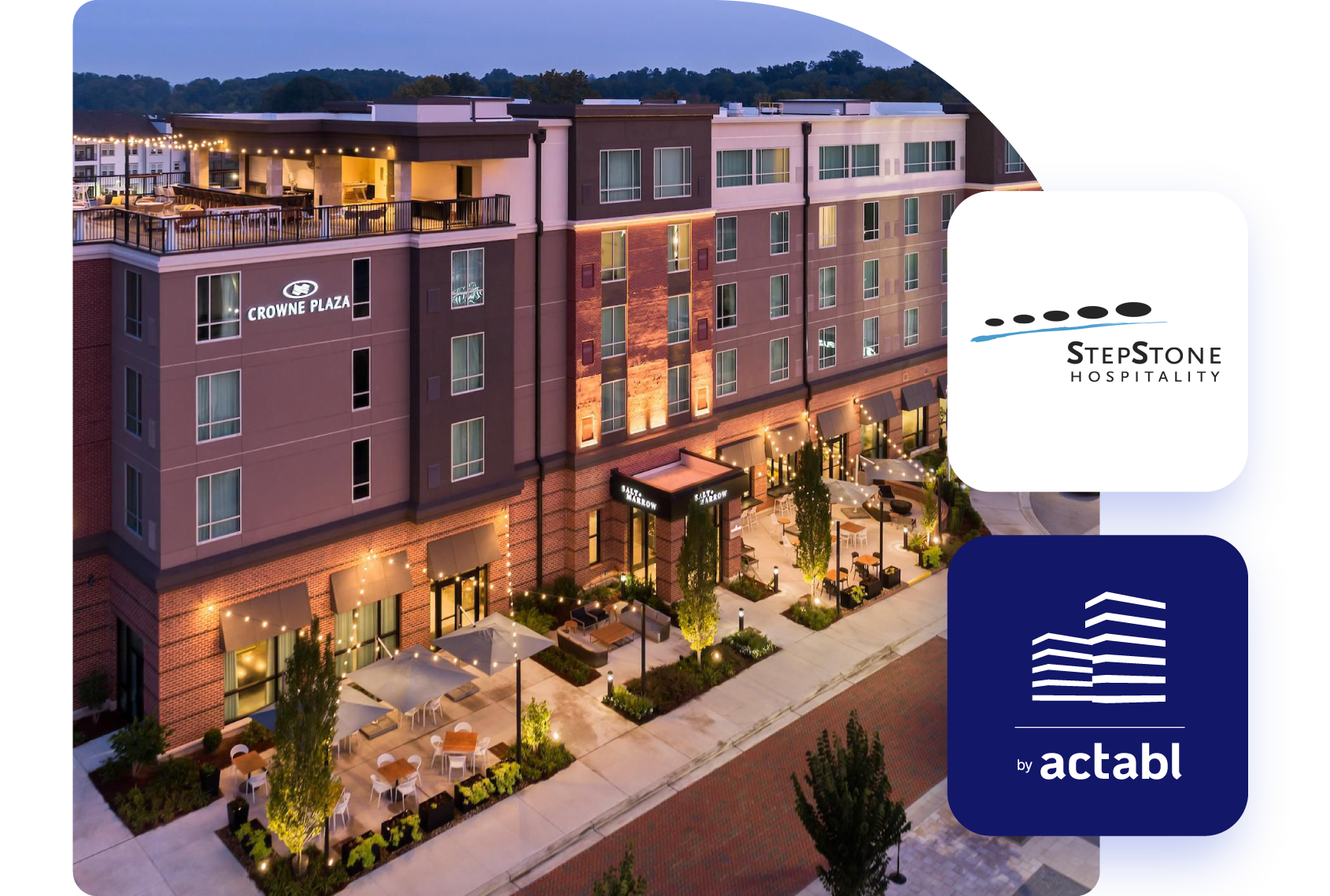
Hotel management means being responsible for a lot of people in a lot of different roles, locations, and positions, all at the same time.
Jack Paul and Tom Sprankle know that well. As senior operations leaders at StepStone Hospitality, their responsibility is to make sure every property in the portfolio has what it needs to succeed: the right staffing model, the right labor plan, and the visibility to catch problems before they grow. This is possible when the data is reliable and current.
Hotel Effectiveness is key to how StepStone makes that happen.
Manual Processes Were Costing More Than Time
Before Hotel Effectiveness, labor management at most StepStone properties looked the same way it had at many hotel companies: spreadsheets, manual inputs, and formulas that could break with a single wrong keystroke.
The team would put in the forecast, then manually enter the hours for every department. If someone accidentally broke a formula in that spreadsheet, it could throw the whole thing off.Jack Paul, Senior Vice President Operations at StepStone Hospitality

Monday mornings were especially costly. Catching up on the weekend alone could take two hours or more and the consequences of a data entry error, something as simple as transposing two numbers, could mean real dollars lost before anyone noticed.
An additional issue was the timing, with manual processes, problems only surfaced after they had already happened. By the time a general manager received their P&L, the window to course correct had closed.
You had to wait until the P&L results were out to see what had actually happened. Now we can see the impact in real time and act on it.Jack Paul, Senior Vice President Operations at StepStone Hospitality
Onboarding New Properties
StepStone has onboarded properties where labor management has been entirely manual. It may have been completed previously with a spreadsheet, or nothing structured at all.
When we transition into a property, we bring on Hotel Effectiveness. We're taking the hotel from something that was time-consuming and antiquated and showing them a more efficient way. For most teams, it's a real turning point.Tom Sprankle, Senior Vice President Hotel Operations at StepStone Hospitality

Getting the team comfortable with a new platform takes time, particularly if it is their first exposure to structured labor management. StepStone introduces the fundamentals first, builds the labor plan alongside the property leader, and adds features as confidence grows.
"It's very user-friendly," Tom said. "Once the team gets the basics down, we can start layering in reporting, alerts, and more. They start to see how much easier it makes their day."
What makes that investment worthwhile is the speed of feedback. Once the team is running daily check-ins, StepStone can see how each property is performing in real time.
We can sit down with the team, build a labor plan together, and start seeing whether it's working within days. That kind of visibility changes how you manage.
Jack Paul, Senior Vice President Operations at StepStone Hospitality
Knowing Where the Numbers are on a Daily Basis
One of the most valuable things Hotel Effectiveness provides is a consistent view across the portfolio. Above-property leaders can see how a hotel is tracking against its labor plan, identify which properties need support, and respond before small issues become larger ones.
The daily labor check-in is where that visibility starts. It takes minutes and gives the team a clear read on where they stand, including the approaching overtime report that Tom describes as one of the most immediately useful features in the platform.
The team loves the approaching overtime report. They find the value in it right away.Tom Sprankle, Senior Vice President Hotel Operations at StepStone Hospitality
Before Hotel Effectiveness, identifying overtime risk meant running a manual report mid-week, often leaving only a day or two to make adjustments. Now we can see on Monday if team members worked long hours over the weekend and have the rest of the week to act.
"It provides a real chance to get ahead of overtime instead of reacting to it after the fact," he said.
Jack put it plainly: "If you're a hospitality leader, you have to be quick and nimble. Last-minute decisions matter. If you're not moving on the right data, you're already behind." Overtime that goes unaddressed compounds quickly.
Even a meaningful reduction, caught early, adds up significantly over a full year. Hotel Effectiveness provides the early visibility to act before overtime compounds. In some properties, that foresight has helped reduce overtime by as much as a third, a reduction in expense Jack says can add up significantly over a full year.

Tool for Recognition and Training
Hotel Effectiveness provides a consistent, objective view of individual productivity across properties. That data shapes how the team trains and develops people, not just how costs are managed.
For example, the team uses the minutes-per-room metrics to recognize top performer and identify opportunities.
Proven Results Make It Easier to Try Something New
One of the more common opportunities in hotel operations is helping a property team see that a different approach is worth trying. Every property has its own history, its own rhythms, and its own way of doing things. Convincing a team to try a different approach takes more than a recommendation.
Hotel Effectiveness helps with the process through its data.
We sit down with a property leader and say: what if we showed you there's another way, and the numbers prove it works? They may say it can't be done. So we show them a benchmark, same brand, same type of hotel, running a better metric. We ask them to try it for 90 days. In almost every case, once they see it, they're on board.
Jack Paul, Senior Vice President Operations at StepStone Hospitality
Industry benchmarking within Hotel Effectiveness, which draws on data from thousands of hotels, makes that conversation possible. When a GM challenges whether a labor target is realistic, there is a factual answer grounded in actual comparable performance.
That consistency extends to every conversation in the organization. When an owner or asset manager reaches out to Jack and then calls the GM directly, they hear the same numbers.
Everyone is working from the same platform. There is nothing subjective about it. Here are the numbers. That consistency builds a lot of trust.Tom Sprankle, Senior Vice President Hotel Operations at StepStone Hospitality

What This Means for Your Hotel Portfolio
If labor management at your properties still depends on spreadsheets, the cost is not just time. It is errors that build quietly, overtime that grows before anyone can respond, and decisions that come too late to change the outcome.
Hotel Effectiveness gives operators a clear, daily view of what is happening at every property and the tools to act quickly when something needs attention.
Benchmark your labor performance against hotel industry standards. Visit HotelData.com to see where your CPOR and productivity metrics stand.
See how Hotel Effectiveness supports portfolio-wide labor visibility. Request a demo at actabl.com/request-a-demo.
See Hotel Effectiveness in Action

See Hotel Effectiveness in Action