
Case Study
How Aperture Hotels Protected Returns in a Tight Market
In a year of declining RevPAR and margin pressure, Aperture focused on a proactive approach to demand-based labor forecasting.


About Aperture Hotels
Aperture Hotels is a third-party hotel management company operating a portfolio of 20 compact full-service, lifestyle, and select-service branded and independent properties in urban, suburban, and leisure markets across the United States.

Led by CEO Charles Oswald, the company delivers value to owners through transparent communication, robust reporting, and sophisticated analytics while creating memorable guest and team member experiences.
About Aperture Hotels
Aperture Hotels is a third-party hotel management company operating a portfolio of 20 compact full-service, lifestyle, and select-service branded and independent properties in urban, suburban, and leisure markets across the United States.

Led by CEO Charles Oswald, the company delivers value to owners through transparent communication, robust reporting, and sophisticated analytics while creating memorable guest and team member experiences.

Why Labor Control Became the Priority
In 2025, softer travel demand and rising operating costs created a more challenging environment for hotel owners. By mid-year, Aperture was operating through four consecutive quarters of declining RevPAR. At the same time, ADR growth was being outpaced by CPI, adding further pressure to margins.
With less revenue cushion and higher expenses, labor became the primary lever to protect and grow EBITDA. The leadership team at Aperture recognized that disciplined staffing, accurate forecasting, and consistent productivity oversight would determine whether assets stabilized or experienced margin erosion.
Why Labor Control Became the Priority
In 2025, softer travel demand and rising operating costs created a more challenging environment for hotel owners. By mid-year, Aperture was operating through four consecutive quarters of declining RevPAR. At the same time, ADR growth was being outpaced by CPI, adding further pressure to margins.
With less revenue cushion and higher expenses, labor became the primary lever to protect and grow EBITDA. The leadership team at Aperture recognized that disciplined staffing, accurate forecasting, and consistent productivity oversight would determine whether assets stabilized or experienced margin erosion.
The Challenge:
Manual Labor Planning With Slowing Revenue
The Challenge:
Manual Labor Planning With Slowing Revenue
Aperture was managing labor through highly detailed Excel spreadsheets. As Charles explains:
“We were as sophisticated as you could get with a set of very fancy Excel spreadsheets.”
But in a year marked by RevPAR decline and margin pressure, spreadsheets were not enough. Labor needed to be forecasted, standardized, and monitored across the portfolio in real time. Small inefficiencies could no longer be absorbed, and owners needed tighter control over labor.
At the same time, leadership did not want to introduce another administrative burden.

The Solution:
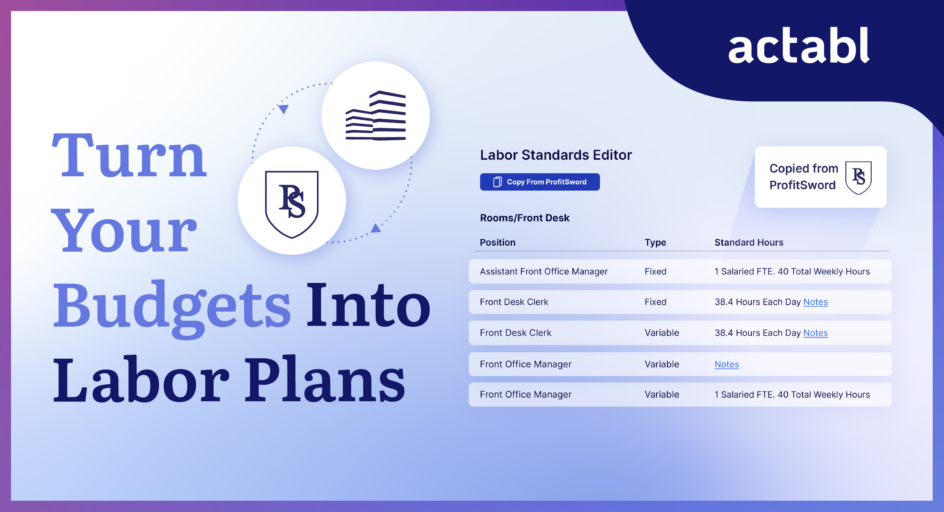
Replacing Spreadsheets With Structured, Demand-Based Labor Forecasting
Aperture implemented Hotel Effectiveness to move from manual labor tracking to a structured, portfolio-wide labor management system.
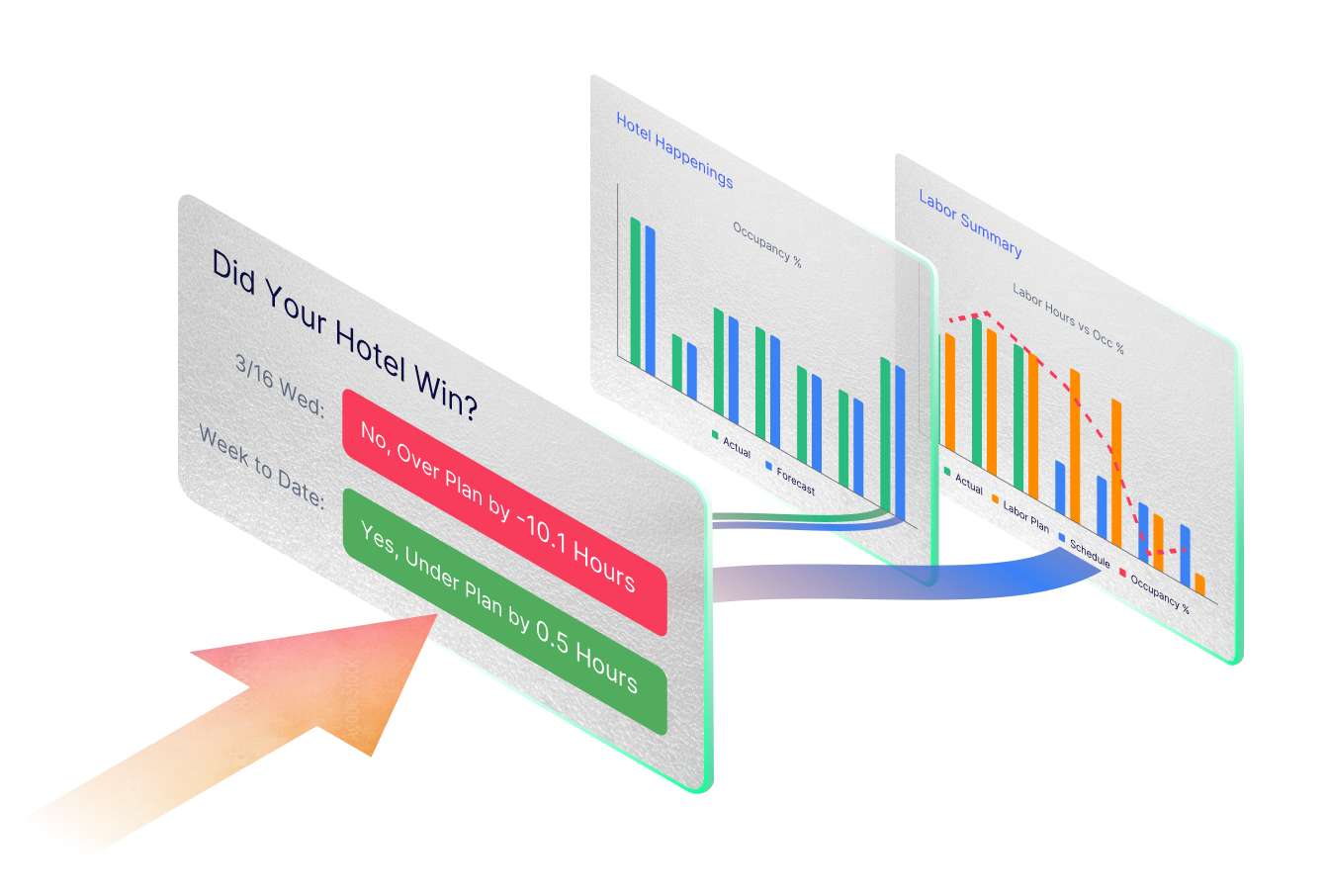
The shift enabled the team to move from reviewing labor after the fact to proactively managing it. Charles describes the focus clearly:

With Hotel Effectiveness, we were able to maintain tighter control over labor and align staffing to real demand, putting the right people in the right place at the right time.
With structured forecasting, scheduling, and visibility, property teams could align staffing levels to actual occupancy and demand patterns. Labor hours were more precisely aligned with business levels, reducing the risk of overstaffing while maintaining service standards.
The Solution:
Replacing Spreadsheets With Structured, Demand-Based Labor Forecasting
Aperture implemented Hotel Effectiveness to move from manual labor tracking to a structured, portfolio-wide labor management system.
The shift enabled the team to move from reviewing labor after the fact to proactively managing it. Charles describes the focus clearly:

With Hotel Effectiveness, we were able to maintain tighter control over labor and align staffing to real demand, putting the right people in the right place at the right time.
With structured forecasting, scheduling, and visibility, property teams could align staffing levels to actual occupancy and demand patterns. Labor hours were more precisely aligned with business levels, reducing the risk of overstaffing while maintaining service standards.
Productivity also became more measurable. As Charles notes:
We can save an average of four and a half minutes per departure room when we tightly track productivity in Hotel Effectiveness. That quickly turns into thousands and tens of thousands of dollars over the course of a couple of years.”
Instead of relying on manual tracking, managers leveraged Hotel Effectiveness’ early-warning indicators, and gained consistent visibility into labor performance across properties.

Productivity also became more measurable. As Charles notes:
We can save an average of four and a half minutes per departure room when we tightly track productivity in Hotel Effectiveness. That quickly turns into thousands and tens of thousands of dollars over the course of a couple of years.”
Instead of relying on manual tracking, managers leveraged Hotel Effectiveness’ early-warning indicators, and gained consistent visibility into labor performance across properties.
The Outcome:
Stronger EBITDA Stability and Transaction Readiness
The Outcome:
Stronger EBITDA Stability and Transaction Readiness
The broader industry was, in Charles’s words, “In a constant battle fighting EBITDA erosion.”
Aperture responded with tighter expense control, placing labor discipline at the center of its operating strategy.
Over the past 11 months, Aperture’s EBITDA gains enabled owners to monetize their investments through 18 property sales. In a year marked by margin pressure, the company focused on sharpening revenue strategy and tightening expense control to protect profitability.
As Charles summarizes:
For Aperture, precise labor forecasting and disciplined expense management became practical ways to protect profits in a challenging market.
Discover how Hotel Effectiveness can help your hotel business track labor productivity and streamline your staffing strategy.