You’re Probably Overpaying Your Vendors. Here’s Why.
If your hotel properties manage vendor relationships independently, you are almost certainly paying more than you need to for at least one major service category.
That is not an indictment of your property teams. It’s a structural problem. When vendor decisions are made at the property level without portfolio-wide visibility, inconsistency is the default, not the exception.
The Problem You Can't See from One Property
In most multi-property portfolios, each hotel selects its own vendors, negotiates its own contracts, and manages those relationships with limited visibility into what other properties are paying for the same work.
The same elevator maintenance scope might cost significantly different amounts at two properties 30 miles apart. One property may have inherited a vendor relationship from a previous management agreement that was never re-evaluated. Another may be paying a premium simply because they never had the data to negotiate.
None of these decisions looks unreasonable in isolation. Each property is managed within its own context, using the information available to it. But when you add those decisions up across 20, 50, or 100 properties, the cumulative cost of that fragmentation is substantial.
What Portfolio-Wide Visibility Makes Possible
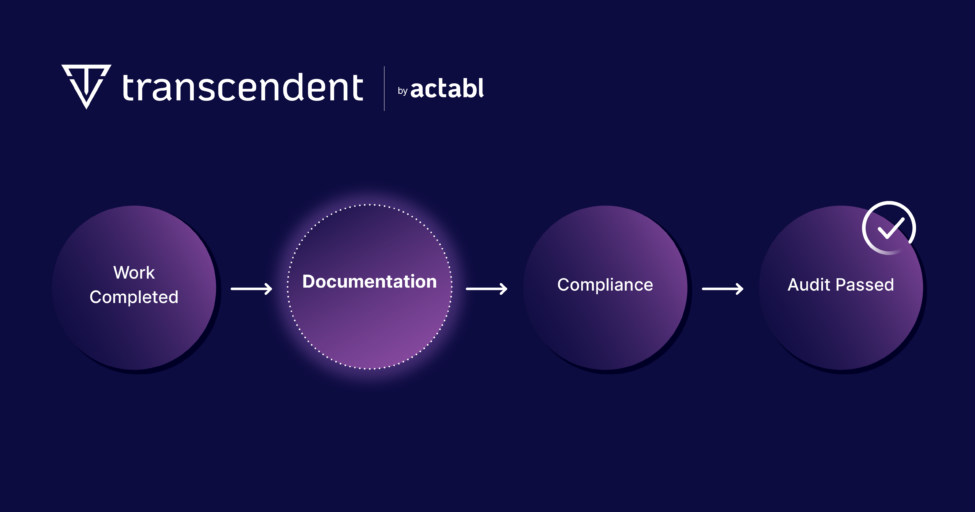
Transcendent centralizes vendor data across properties, making it possible to evaluate cost, performance, and contract terms side by side for the first time.
That visibility turns vendor management from a property-level task into a portfolio-level strategy. Operators can see which vendors are being used at each property, what they’re charging, and how their service outcomes compare. Inconsistencies that were invisible at the property level become clear at the portfolio level.
One operator used Transcendent's document management module to consolidate all their elevator maintenance contracts across their portfolio. With contract terms, pricing, and vendor performance visible in one system, they evaluated each agreement, identified significant pricing variation for an identical scope of work, and consolidated from multiple vendors down to a few preferred providers. The result was lower overall contract costs and a higher level of service driven by increased purchasing power and economies of scale.
That comparison was not possible when each property managed its own contracts in its own filing system. The data to make the decision simply didn’t exist in a usable form until it was centralized.
Beyond Cost Reduction
The financial benefit of vendor consolidation is the most immediate impact, but it’s not the only one. When operators standardize vendors across properties, they gain leverage:
- Contract negotiations are backed by portfolio-wide volume.
- Performance expectations become consistent and measurable.
- Accountability improves because there is a shared standard against which service quality can be evaluated.
Service quality often improves alongside cost reduction. Vendors who serve a larger share of the portfolio have a stronger incentive to perform, and operators have the data to hold them to it.
For multi-property operators managing vendor relationships across brands and regions, that combination of cost visibility, purchasing leverage, and performance accountability is difficult to achieve without a centralized system. With Transcendent, it becomes a repeatable process rather than a one-time project.
This is one of seven hidden cost areas covered in our full eBook: 7 Hidden Ways Asset Management Software Is Saving Hotels Money. Download now.